
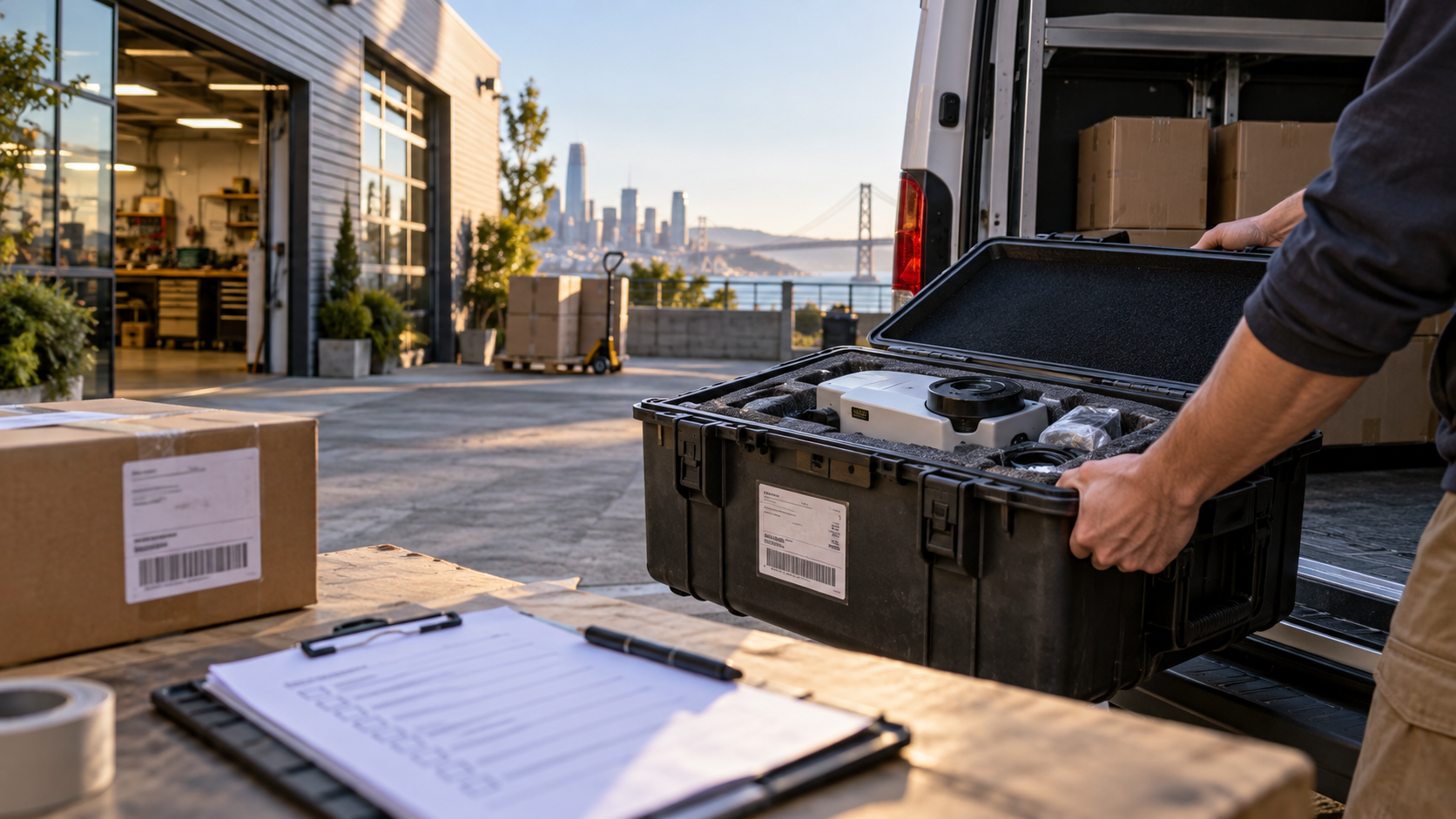
Identify when property leaves the schedule
A demo unit, test fixture, loaned tool, or customer evaluation device can travel through hands and locations not reflected in a fixed-premises property schedule. Begin the review before shipment, not after a courier or customer asks who is responsible.
Record where the item goes, how long it will be away, who controls it, how it travels, and whether it is installed, tested, or stored at the destination.
Prepare a transit file
Create a serial-numbered register with value, photographs, packing method, carrier, consignee, destination, departure and return dates, and the owner of any accessories. Keep the customer trial agreement or equipment-loan terms in the same file.
Separate owned prototypes from customer property and rented equipment. Responsibility for physical loss can be allocated differently from the cost to rebuild data, engineering work, or a delayed launch.
- Declared value and replacement lead time
- Custody, shipment, and return terms
- Testing activity and destination conditions
Compare transit and testing terms
Ask whether the proposed form addresses property in transit, property at a customer location, unattended vehicles, mysterious disappearance, and equipment used during installation or testing. Check deductibles, valuation, territorial limits, and any scheduled-item requirements.
Do not assume a standard property policy, general liability policy, and inland marine form treat a prototype the same way. Each responds to different wording and facts.
Close the loop after the test
Log return condition, location changes, repair activity, and any new customer requirements. A completed trial often becomes the first step toward a wider deployment, which may need a fresh description.
Policy wording, declarations, and endorsements control. Use this record to make the next coverage discussion specific.
Account for the full chain of custody
Prototype insurance preparation should follow the unit from packing bench to return shipment. Document handoff to a freight carrier, customs broker, field technician, customer receiver, laboratory operator, and any subcontractor. Include tracking references, packing condition, storage instructions, and who can authorize a change in destination.
Field teams should also distinguish the physical unit from batteries, sensors, laptops, fixtures, cables, calibration standards, and removable data media. A missing accessory can stop a trial even if the primary unit arrives intact, which matters when estimating interruption and replacement priorities.
Turn customer trials into repeatable operating controls
Use a trial checklist that records the customer site, permitted use, training completed, environmental limits, inspection date, incident contact, return date, and acceptance criteria. This gives sales, engineering, and operations a common description before the prototype is placed with a customer.
When the same prototype is redeployed, update its condition, location, and configuration. An inland marine or business-property review is more useful when the company can describe the unit as it exists today instead of as it existed when it first left the shop.